
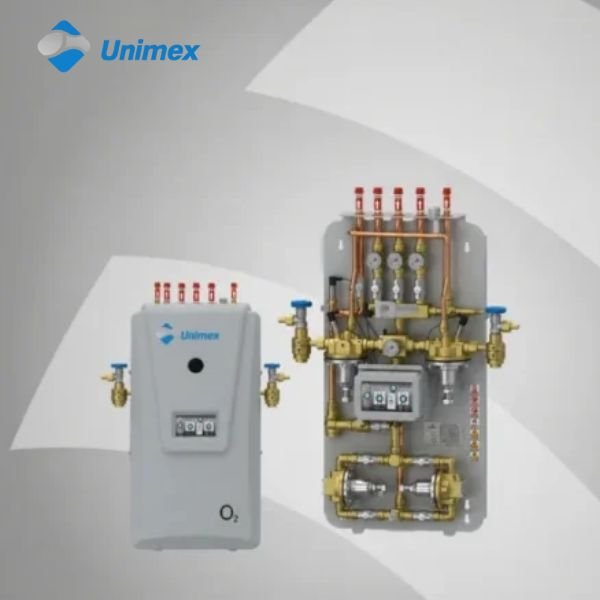
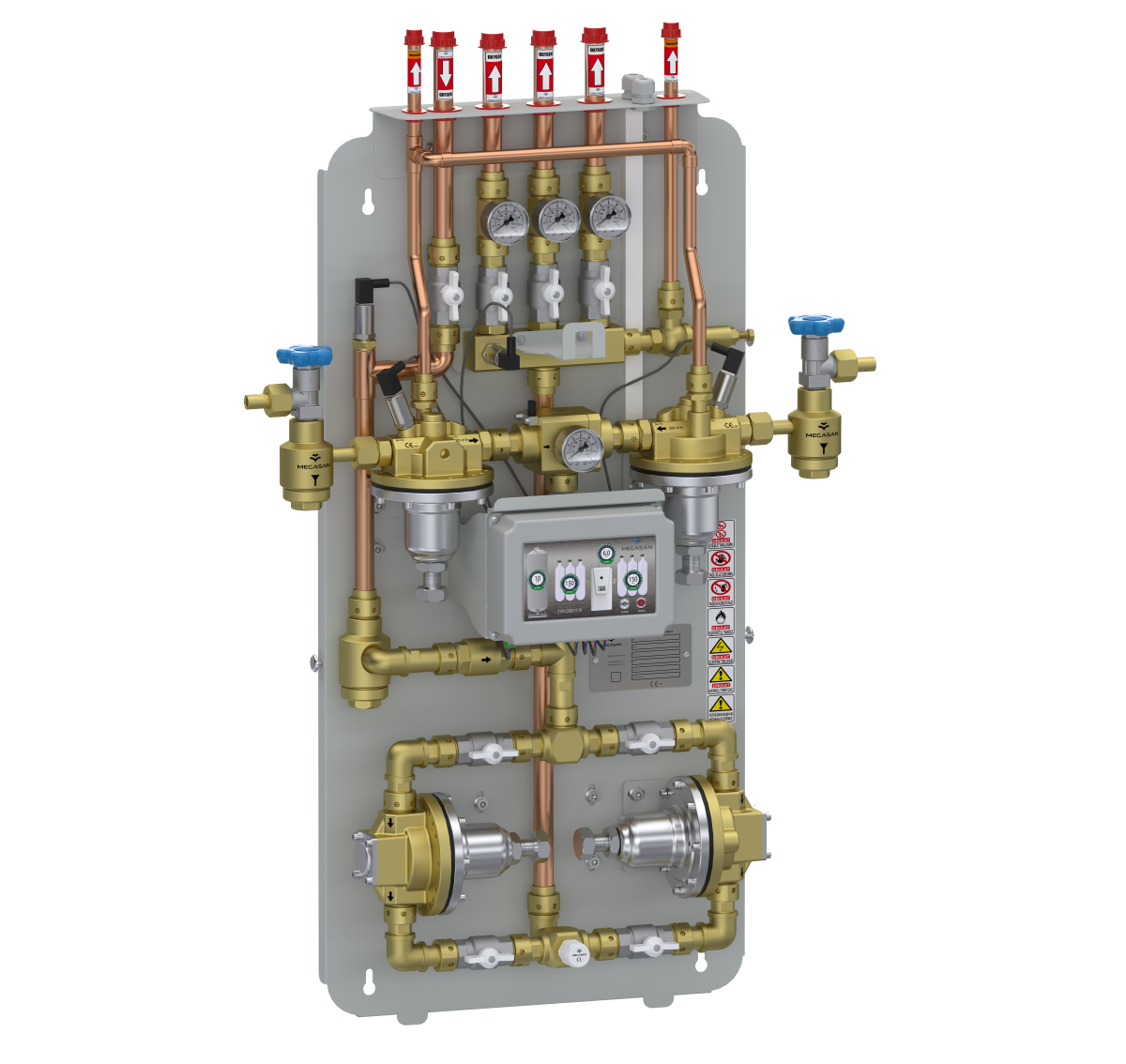
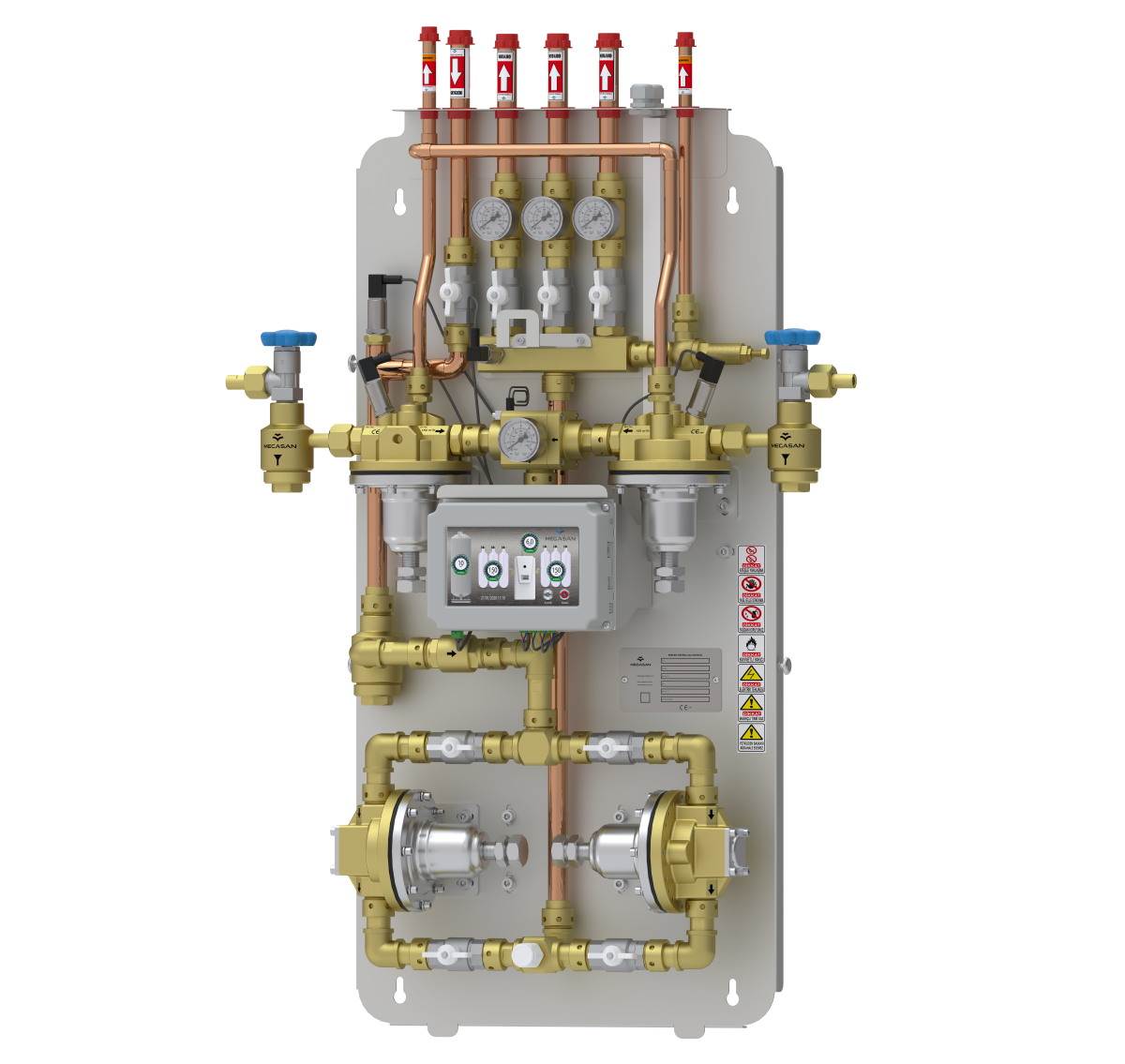
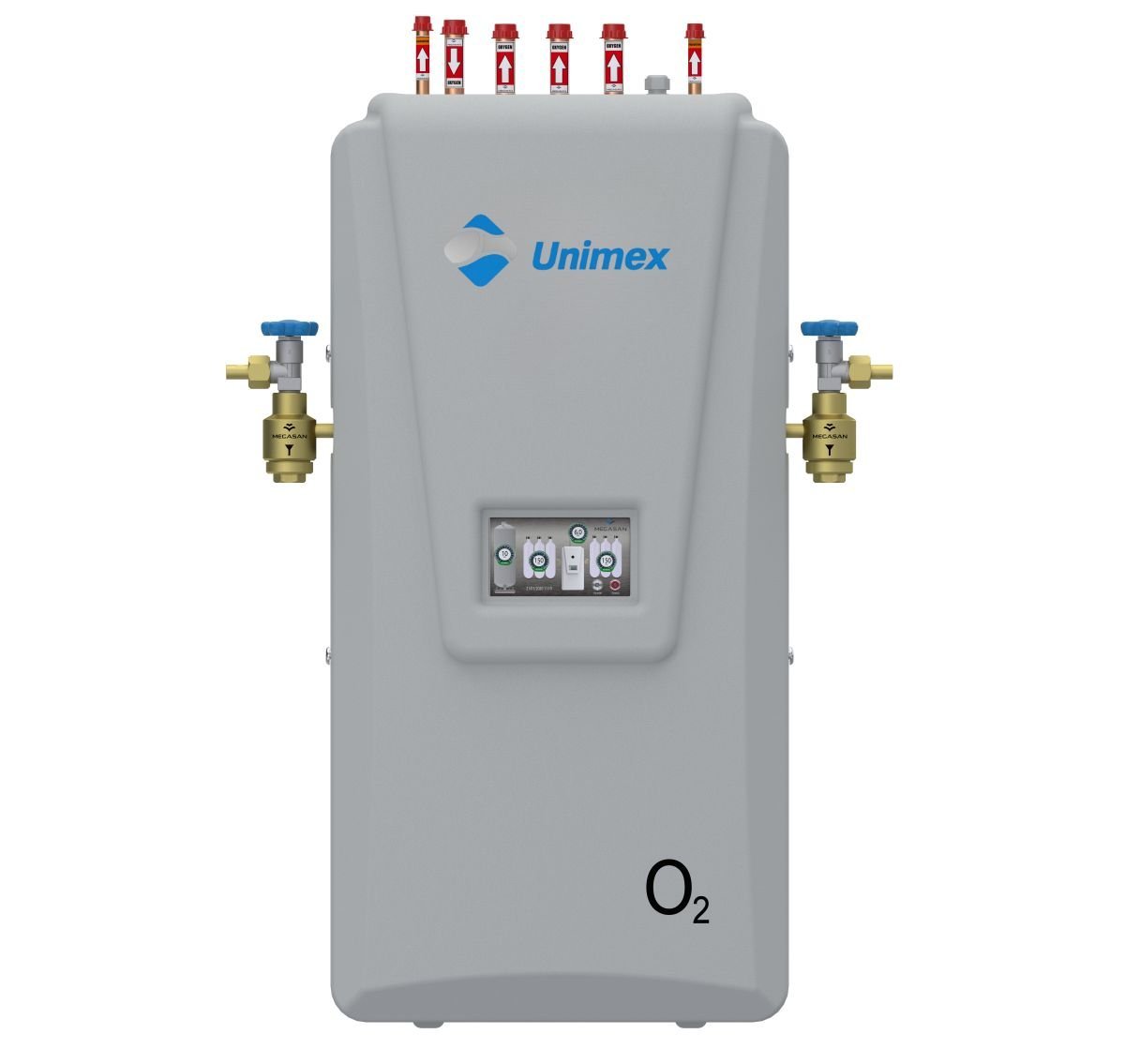
High-pressure reducers ensure the safe supply of medical gases (O2, CO2, N2O, compressed dry air, etc.) from high pressure (230 bar) to the required pressure values by adjusting them via manifolds connected to gas cylinders. They are typically reduced to values between 4-8 bar.
Intended Use
By reducing the pressure of high-pressure incoming cylinders, it ensures that medical devices and instruments on the system are adjusted to safe operating pressures and guarantees uninterrupted gas flow thanks to the automatic switching system. Applications: It provides high-pressure medical gases from gas cylinders to patients and/or devices by reducing and limiting their pressure to a specific value. Location-wise, installations are generally made in hospital basements or, considering safety reasons (against combustion and explosions), in medical gas handling rooms located within the hospital campus. The important point here is that flammable gases such as oxygen and nitrogen, which are at high pressure, must be kept as far away as possible from combustible or oily elements. Therefore, flammable gases such as oxygen and nitrogen should be kept away from oil-based systems such as air and vacuum handling units and must be installed in separate rooms.
Technical Specifications
Product Code: MG-YBDNx
“x: O (Oxygen), A (N2O), SA (Pure Nitrogen), KG (Mixed Gas), K (CO2), H (Dry Air)”
Inlet Pressure: Max. 230 Bar Inlet Pressure
Outlet Pressure: 4 – 7 Bar Capacity: 220 m³/h
Number of Inlet Ports: 4 (Main Ramp, Backup Ramp, External Power Point, Emergency Power Point)
Operating Temperature Range: (+10) – (+45) C°
Power Supply: 200-240 V 50-60 Hz 100 Watt
Packaging Type: Cardboard Box
Package Dimensions: 107 x 75 x 24 cm
Alarm System: LCD Alarm, Alarm, Audible Warning, Touchscreen LCD Alarm Panel (optional)
Connection Type: 2 x ModBus

Adding inputs for liquid tank and generator connection eliminates the need for an additional control panel.

Thanks to its integrated collector system, the system ensures safe gas distribution to areas where it is needed; when a line requires service, maintenance, or any repair, the gas flow is stopped via the relevant distribution collector system, allowing the repair process to be carried out safely, while gas flow in other distribution lines continues safely. Furthermore, any malfunctions that may occur on the pipeline can be backed up with a dual-line backup thanks to this system.
*The diameters of the distribution manifold, outlet valve, and pipes are manufactured in accordance with the relevant project and hospital requirements.

Thanks to the newly designed filter system, the narrowing of the diameter at the gas inlets is prevented, and any particles that may enter the power plant from the gas sources are trapped, thus extending the life of the power plant. *A small filter is included; however, due to the filter clogging quickly, a larger, optional filter is recommended.

A robust, angular, hygienic and safe cover made of ABS plastic that protects the entire system from external factors.

A 7” alarm system can be used on the panels, which can be added as needed, display pressure values on ramps, provide visual and audible alarms, repeat and record given alarms, has ModBus integration, is password-protected preventing unauthorized personnel from accessing it, shows the area where it is installed, and can be equipped with a PLC screen or a touch-sensitive LED screen if desired. For detailed information about alarm units, please refer to the UNIMEX Functional Alarm Systems catalog

During cylinder supply, the alarm indicates whether the gas inlet is coming from the main or backup side. It serves as a guide for technical personnel, showing when it’s time to change the cylinder.

To ensure the system can be supplied with gas in the event of a possible malfunction at the Central Medical Gas Plant, an emergency inlet with a gas-specific NIST connection will be added to the plant.

Specifically designed with power outages in mind, the mechanically engineered ramp changer features a Change-Over (Automatic) system that, thanks to visual and auditory alarm systems, signals when the gas flow has been interrupted in one or all of the primary and backup ramps, indicating that the cylinders need to be replaced.

In situations where the hospital needs to operate beyond its capacity (natural disasters, pandemics, etc.), the product safely and reliably meets the hospital’s needs for an extended period, exceeding its maximum capacity.

Thanks to ISO 32 color coding used on pressure gauges, valve couplings, and NIST caps, pipe labels indicating inlet and outlet directions on copper pipes, and gas-specific markings on the casings, all gases can be distinguished, providing technical personnel with peace of mind regarding the prevention of gas mixing.

All surfaces in contact with the gas are made of copper and brass, compatible with all medical gases, including oxygen, and fitted with gaskets. All gas-contact surfaces are manufactured from materials that will not react with the gases.

In situations where sudden pressure increases occur within the product, it ensures the safe operation of the system by releasing the high-pressure wave in a pressure-sensitive manner, while also ensuring the safety of the environment where the product is located by expelling these flammable gases outside the building.
In addition to its elegant and minimalist design, making the system more user-friendly, economical, understandable, and simpler has been one of our primary R&D goals in this product design. The resulting system is as simple, understandable, and easy to modify as possible.

When the product is installed on site, there are pre-use insulation plugs to prevent the unit from becoming contaminated and thus contaminating the piping system before the piping and welding are done.

In the event of any power outage, the panel cover can be opened and the system pressures can be observed by checking the fully mechanically operated pressure gauges.

A plastic separator is used to prevent the panel sheet from damaging the copper pipes and to prevent corrosion and oxidation of the copper pipes.